
A small bedroom doesn’t have to feel small.
In fact, some of the most beautiful bedrooms are compact spaces where every design choice has a purpose. But a few surprisingly common decorating mistakes can make an already-small room feel cramped, cluttered, and much tighter than it really is.
The good news? You don’t necessarily need new furniture—or a bigger budget—to fix them.
Sometimes, changing the size of a rug, raising your curtains, simplifying your color palette, or removing just one piece of furniture can completely change how spacious your bedroom feels.
Take a look at the before and after below.
A Real Small Bedroom Transformation
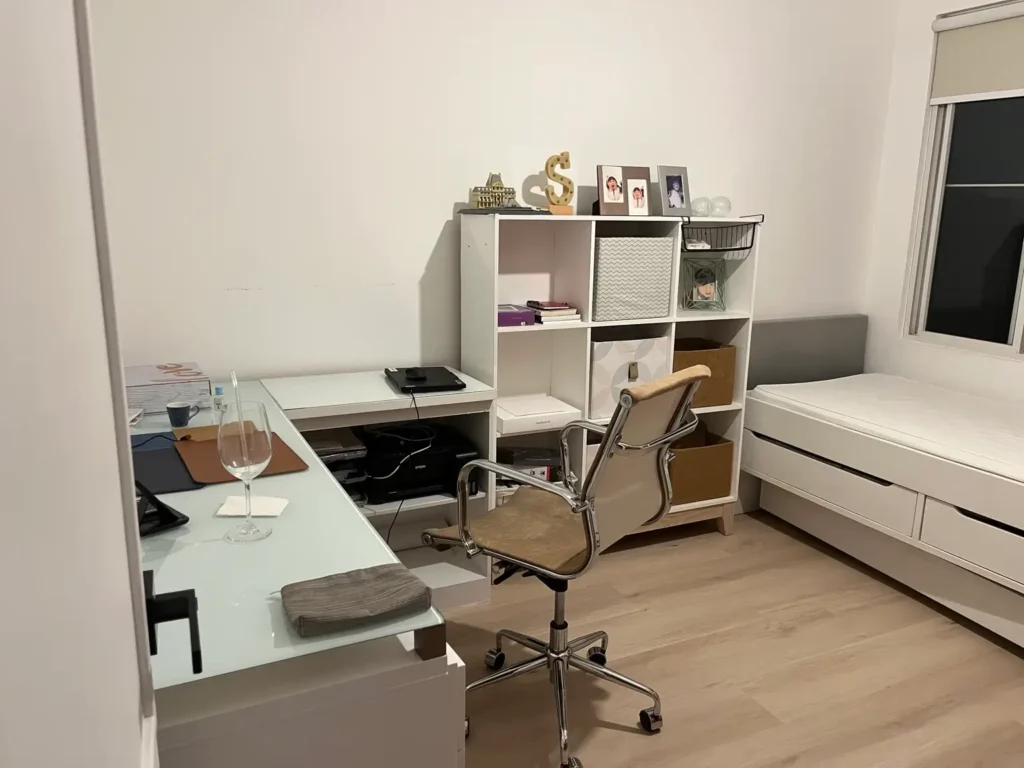
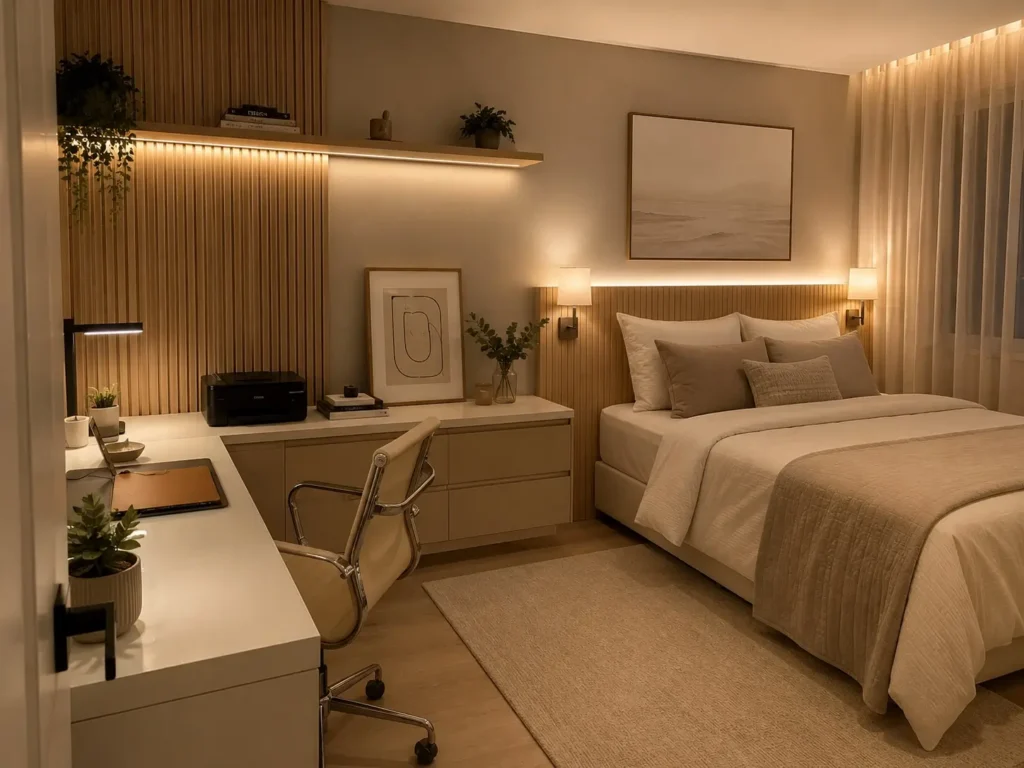
This real bedroom had to do double duty as both a sleeping space and a home office. The room itself didn’t get any bigger. Instead, the redesign focused on reducing visual clutter, creating more cohesive storage, improving proportions, and making the bedroom and workspace feel like one intentional space.
The result shows an important small-space lesson: sometimes making a room feel bigger isn’t about removing function — it’s about reducing visual noise.
Could your bedroom be making one of these mistakes?
Let’s find out.
1. Your Rug Is Too Small
A small bedroom doesn’t always need a small rug.
In fact, choosing a rug that’s too tiny can visually divide the floor into separate sections, making the entire room feel smaller.
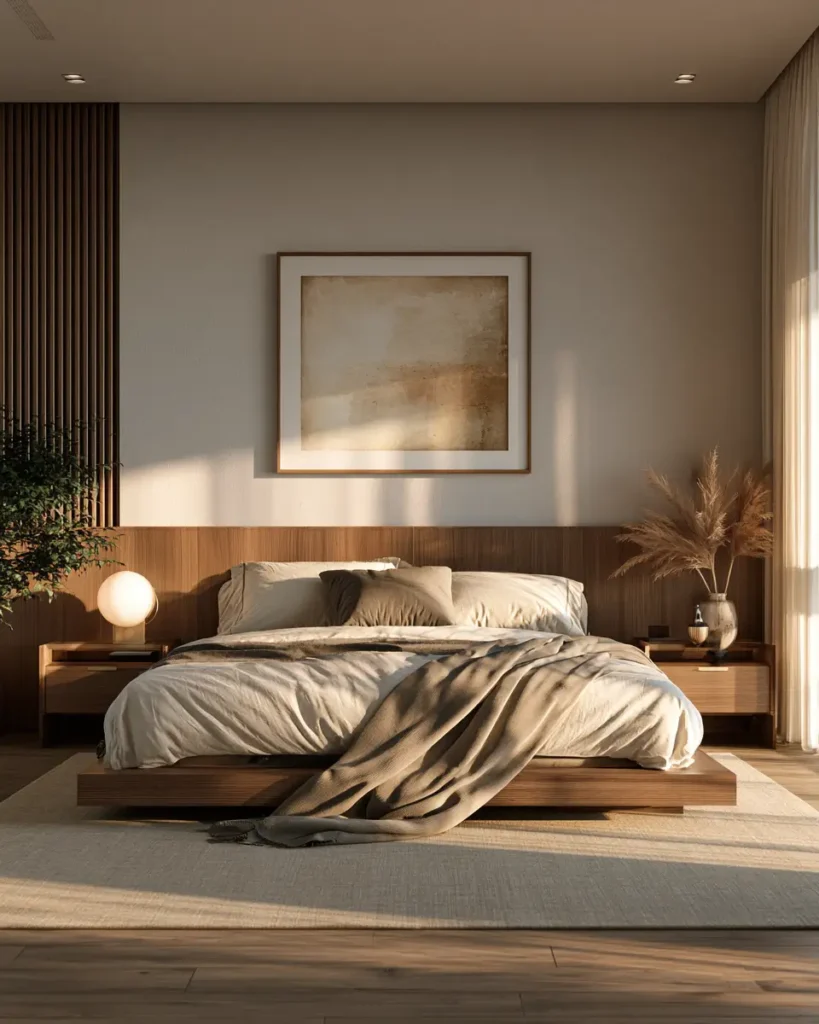
Instead, use a rug large enough to extend beyond the sides of the bed. This creates one larger visual zone and makes the bed arrangement feel grounded rather than squeezed into the room.
If replacing your rug isn’t an option, experiment with its placement. Even repositioning an existing rug so more of it is visible around the bed can improve the proportions.
Try this: Aim for a generous amount of rug showing on both sides and at the foot of the bed.
2. Your Curtains Stop at the Window
This is one of the easiest small-bedroom mistakes to fix.
When a curtain rod sits directly above the window frame and the curtains end near the bottom of the window, your eye immediately registers the actual size of the window.
Instead, create the illusion of height.
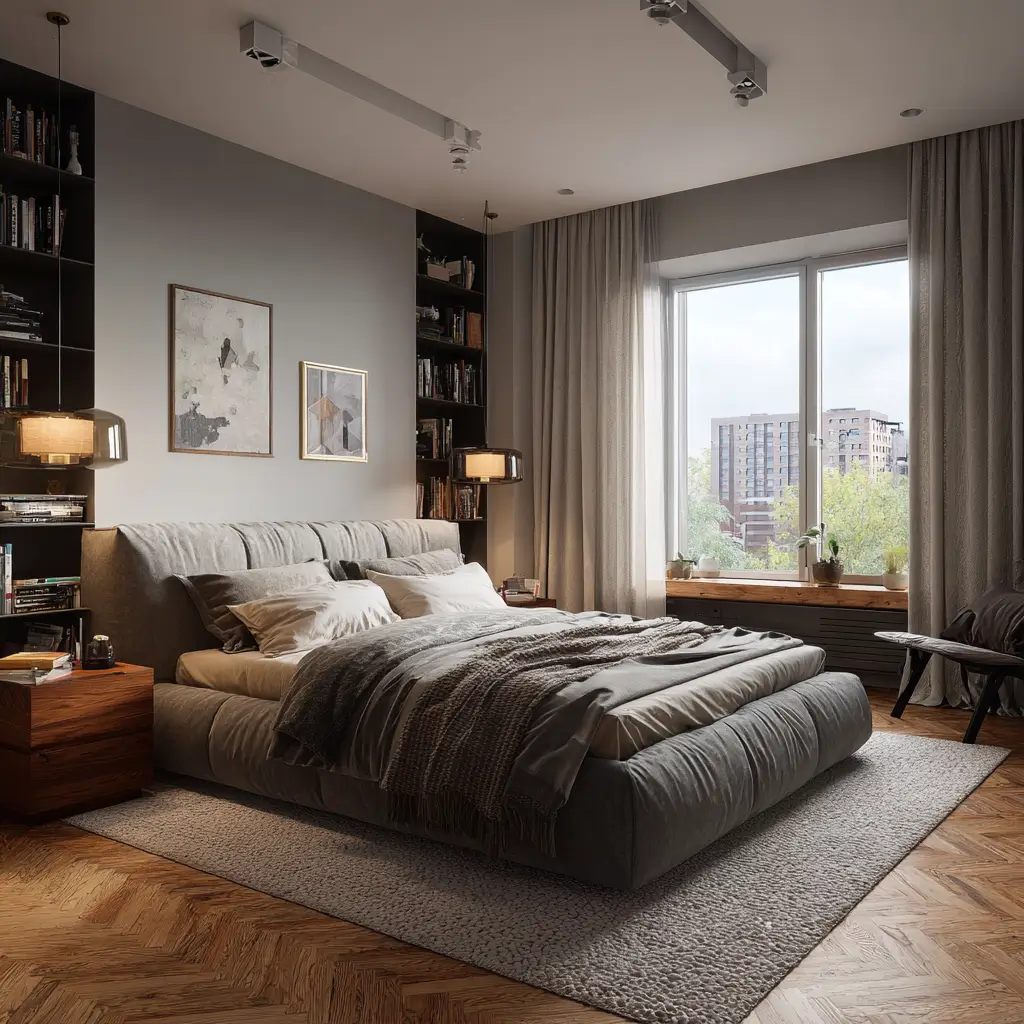
Hang the curtain rod closer to the ceiling and allow the curtains to fall all the way to the floor.
You can also extend the rod beyond the window frame. When the curtains are open, more of the glass remains exposed, allowing additional natural light into the room.
The result?
The window looks larger, the ceiling appears higher, and the entire bedroom feels more open.
3. You Have Too Many Small Pieces of Furniture
It sounds logical: small room = small furniture.
But filling a bedroom with lots of tiny pieces can actually create more visual clutter.
A small nightstand, another little cabinet, a narrow shelf, a storage basket, a stool and an extra side table may individually seem harmless.
Together, they create a room full of edges, gaps and objects for your eyes to process.
Often, fewer, slightly larger pieces work better.
One well-proportioned dresser may provide more storage and look calmer than several small storage units scattered around the room.
Before buying another piece of furniture, ask yourself:
Can something already in this room do the same job?
4. Everything Is Pushed Against the Walls
When space is limited, the natural instinct is to push every piece of furniture as far against the walls as possible.
Sometimes that’s necessary—but not always.
A room where every object hugs the perimeter can feel rigid and emphasize its boundaries.
Even a few inches of breathing room can help.
For example, rather than squeezing a small chair tightly into a corner, try removing it entirely. Instead of filling every empty wall with furniture, allow some walls to remain intentionally open.
Empty space is part of the design.
You don’t have to decorate every inch of a small bedroom.
5. Your Bed Is Visually Overwhelming the Room
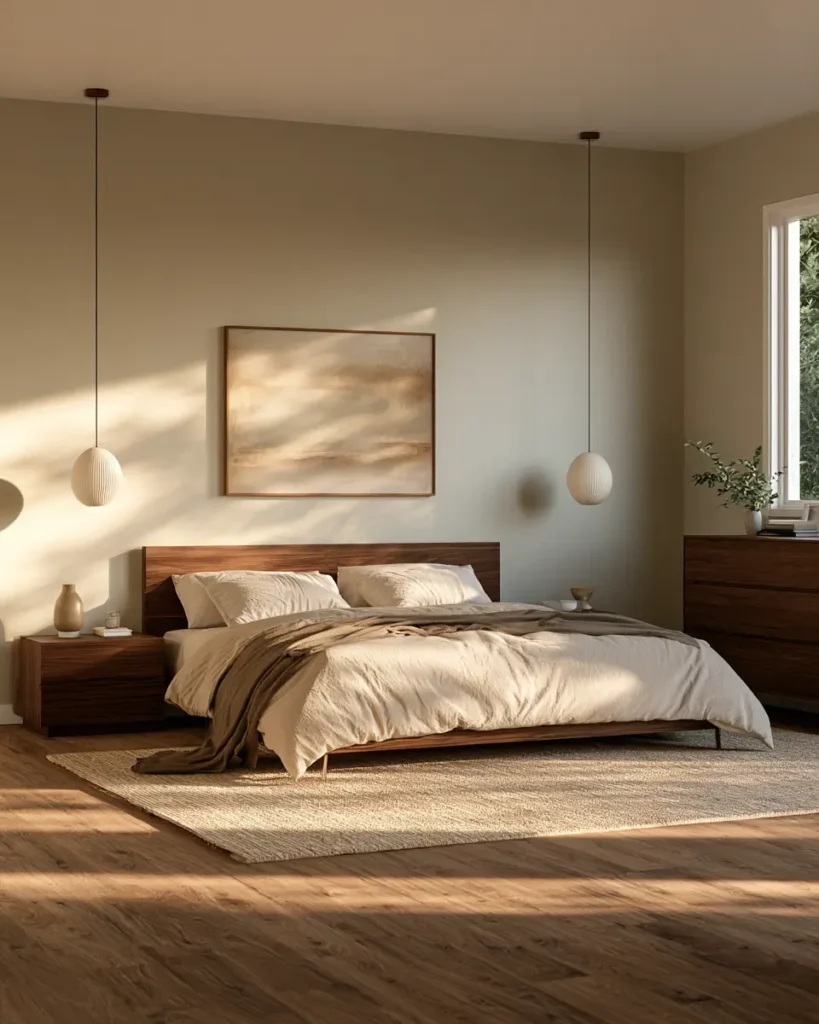
Your bed is usually the largest object in the bedroom, so its visual weight matters.
A very tall headboard, bulky bed frame, oversized bedding and multiple layers of decorative pillows can make a small room feel dominated by the bed.
You don’t necessarily need a smaller mattress.
Instead, reduce the visual bulk around it.
Consider a streamlined bed frame, a lighter-looking headboard, simple bedding and fewer decorative pillows.
Another trick is to keep the area underneath visually clean. Beds with visible floor space beneath them can sometimes feel lighter than heavy frames that extend all the way to the floor.
The goal isn’t minimalism.
It’s balance.
6. You’re Ignoring Vertical Space
When floor space is limited, look up.
One of the biggest missed opportunities in a small bedroom is leaving the upper half of the room completely unused while crowding everything near the floor.
Vertical design draws your eye upward, which can make the room feel taller.
Think:
- tall mirrors;
- vertical artwork;
- wall-mounted lighting;
- floating shelves;
- higher curtain rods;
- narrow, tall storage.
But don’t do all of these at once.
Choose one or two vertical elements and let them create height without adding clutter.
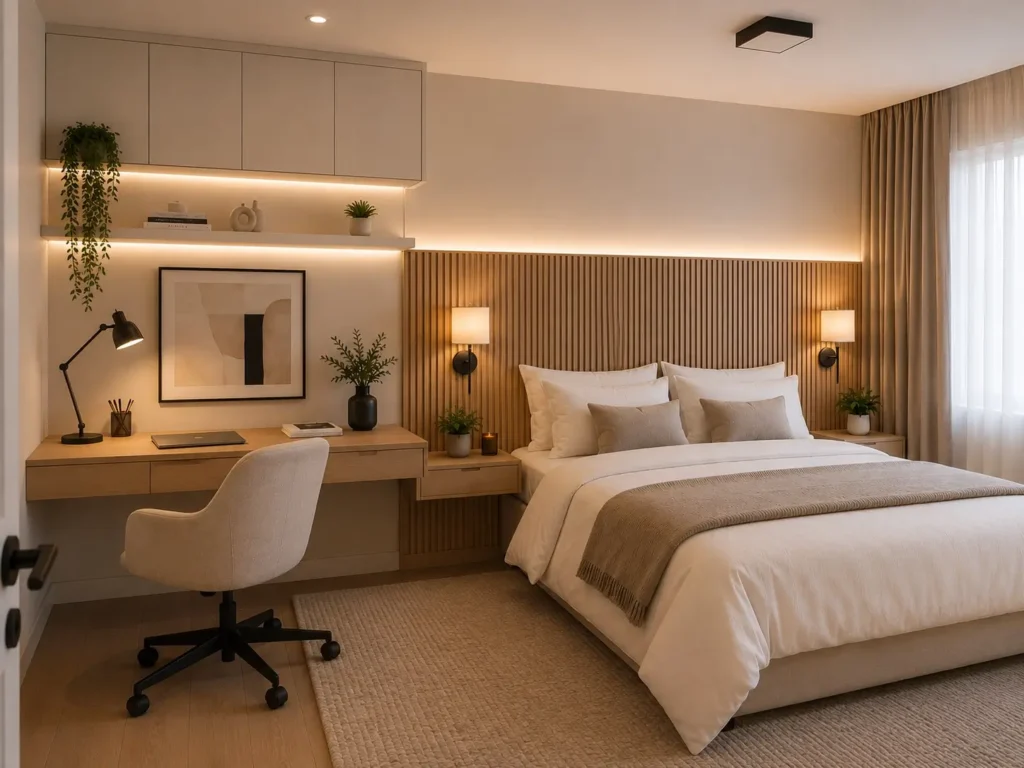
Our design concept for the same compact bedroom shows how built-in storage and vertical elements can make better use of limited space.
7. Your Lighting Is Making the Room Feel Smaller
One ceiling light in the middle of the room rarely creates the most flattering atmosphere.
It can leave corners dark, flatten textures and make a small bedroom feel closed in.
Instead, think in layers.
Combine natural light with ambient and task lighting.
A ceiling fixture can provide general illumination while bedside sconces or lamps create softer pools of light.
Wall-mounted sconces are particularly useful in compact bedrooms because they can free up precious nightstand space.
Mirrors can help, too.
Place one where it can reflect natural light from a window rather than simply filling an empty wall.
Suddenly, the room feels brighter and deeper.
8. Too Many Colors Are Competing for Attention
Small bedrooms don’t have to be white.
Deep greens, blues, warm taupes and even dramatic colors can look beautiful in compact spaces.
The problem isn’t necessarily dark color.
It’s visual fragmentation.
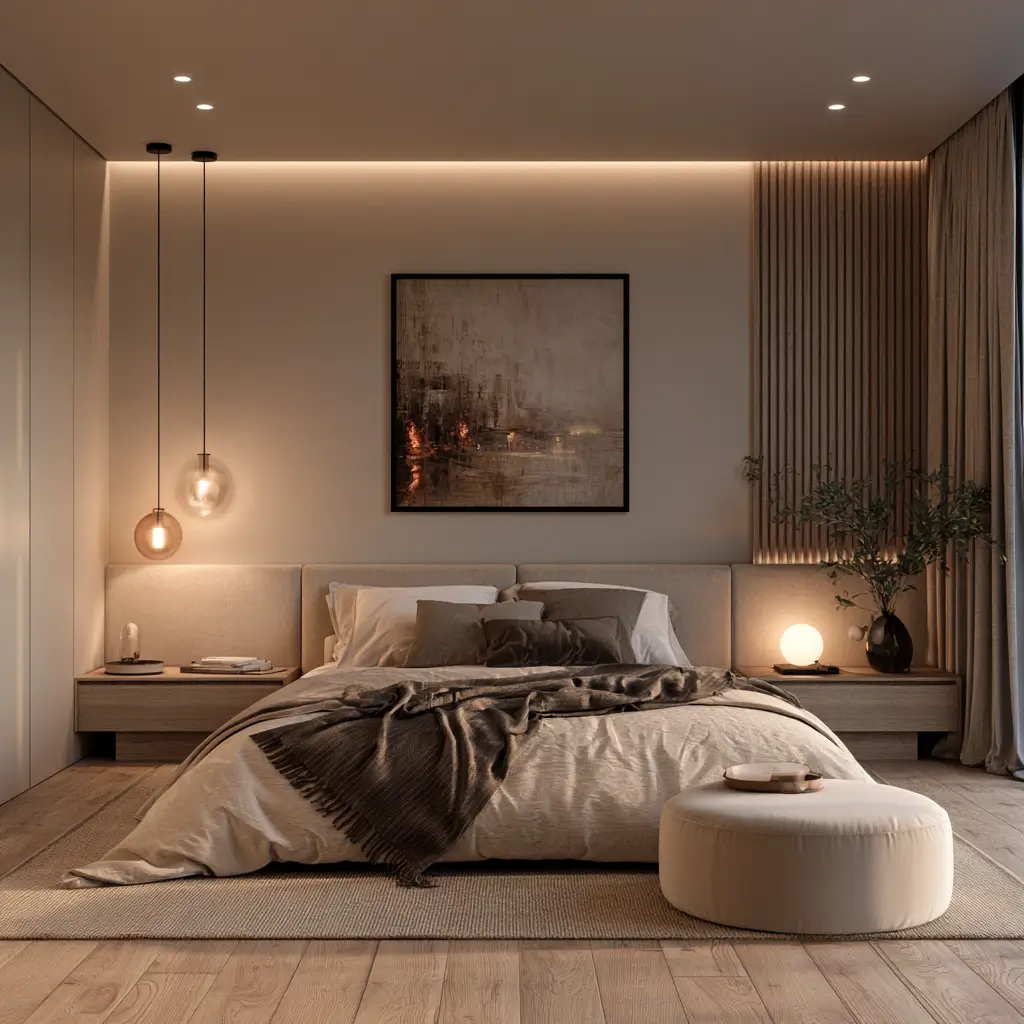
When the walls, curtains, bedding, rug, furniture and accessories all compete in unrelated colors and patterns, the eye has nowhere to rest.
Try creating a more cohesive palette instead.
Choose one primary color family, one complementary neutral and a limited number of accent colors.
For example:
Warm white + beige + muted olive.
Or:
Soft taupe + cream + warm wood.
Repeating similar tones throughout the bedroom creates continuity—and continuity can make the space feel larger.
9. Clutter Is Stealing Your Visual Space
You can have a beautifully decorated bedroom and still make it feel smaller simply by leaving too many things visible.
Phone chargers.
Skin-care products.
Books.
Clothes.
Water bottles.
Jewelry.
Bags.
None of these items is a problem individually. But when dozens of everyday objects remain visible, they create constant visual noise.
The solution isn’t to own nothing.
It’s to give everyday items a home.
Use drawers, attractive boxes, baskets and hidden storage for the things you need but don’t necessarily want to see.
Then leave a little empty space on your nightstand and dresser.
That empty surface can make the entire room feel calmer.
10. You’re Choosing the Wrong Scale
This may be the most important rule of all.
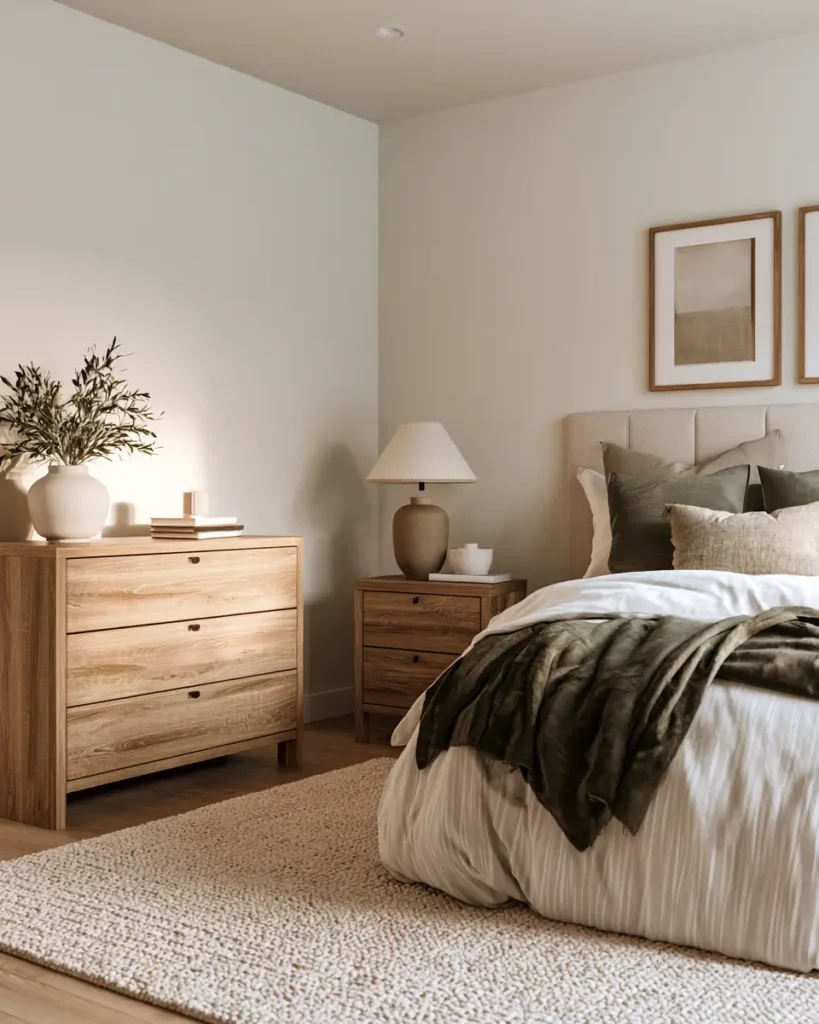
Small-space decorating isn’t about making everything small.
It’s about proportion.
A tiny piece of art floating above a queen-size bed can make the wall feel awkward.
Six tiny decorative objects may create more visual clutter than one beautiful statement piece.
Three narrow storage units may feel busier than one appropriately sized dresser.
Instead of asking:
“Is this small enough for my bedroom?”
Ask:
“Is this proportional to the space around it?”
That’s a much better design question.
The Small Bedroom Formula That Works
If your bedroom feels cramped, don’t rush to replace everything.
Start with the changes that cost nothing.
Remove unnecessary furniture.
Clear visible clutter.
Reposition your rug.
Simplify the bedding.
Open the curtains completely.
Then look at the room again.
Next, focus on the changes that create the biggest visual impact: properly hung curtains, better lighting, appropriately scaled furniture and a cohesive color palette.
The secret to making a small bedroom feel bigger isn’t squeezing more into it.
It’s giving your eyes fewer interruptions and allowing the room to breathe.
And sometimes, the best small-bedroom makeover begins with something surprisingly simple:
removing one thing instead of adding another.